How to Get Elite Gigs in BitLife: Model Rank Guide
A practical route from a prepared model to better gigs, with checkpoints for access, practice, feedback, and promotion.

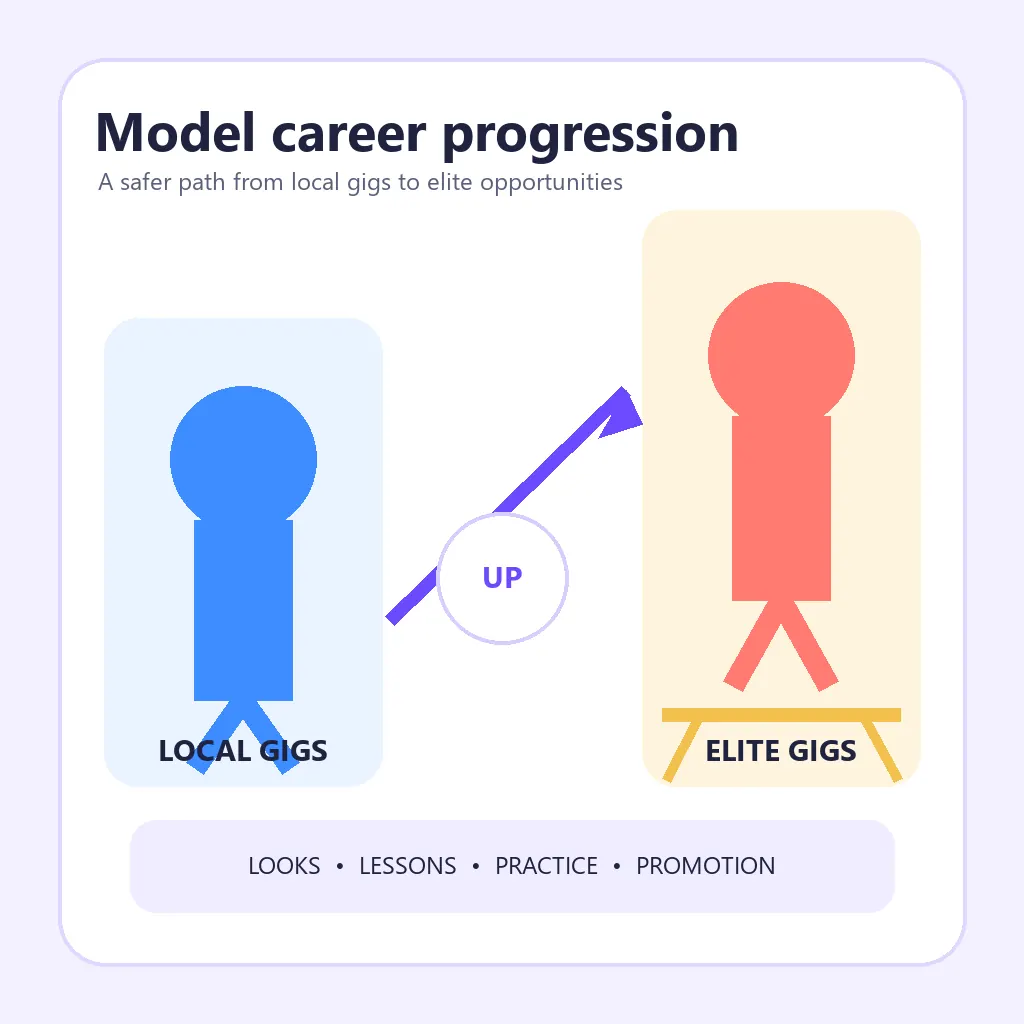
Players searching for how to get Elite Gigs in BitLife usually want a clear unlock condition. The difficult part is that modeling opportunities are not always presented as a single permanent level. Your character, access to the modeling feature, recent work, preparation, and the version of the game can all affect what appears.
The useful approach is to treat Elite Gigs as a promotion route. Start with a viable model, learn the career system, use local work to build evidence, and protect the statistics that keep the next opportunity available. This guide focuses on that narrow progression question, while the broader model-answer patterns remain covered in the BitLife model guide.
What Elite Gigs Mean in BitLife
Elite Gigs are the higher-status opportunities in the model-career path. They are attractive because they can provide stronger career momentum, but they also expose weak preparation more quickly than a low-stakes local job.
- They are a progression target — An elite opportunity is best treated as the next career tier, not as a random shortcut. Local work, lessons, and a stable profile help create the conditions for it to appear.
- They are not the same as model answers — Model answers describe how to respond to a prompt. Elite Gigs describe which opportunities are available. You need both the right access and the right audition judgment.
- Access can be version-sensitive — Menus, packs, and special-career requirements can change. If a guide describes a button that is absent in your game, verify the feature state before repeating the same action.
Practical rule
Use local gigs to earn information and experience. Try an elite opportunity when the model is prepared, not simply when the option looks exciting.
What to Prepare Before Trying Elite Gigs
Before hunting for the top tier, make the rest of the run easy to maintain. A strong base gives you more attempts and makes feedback easier to interpret.
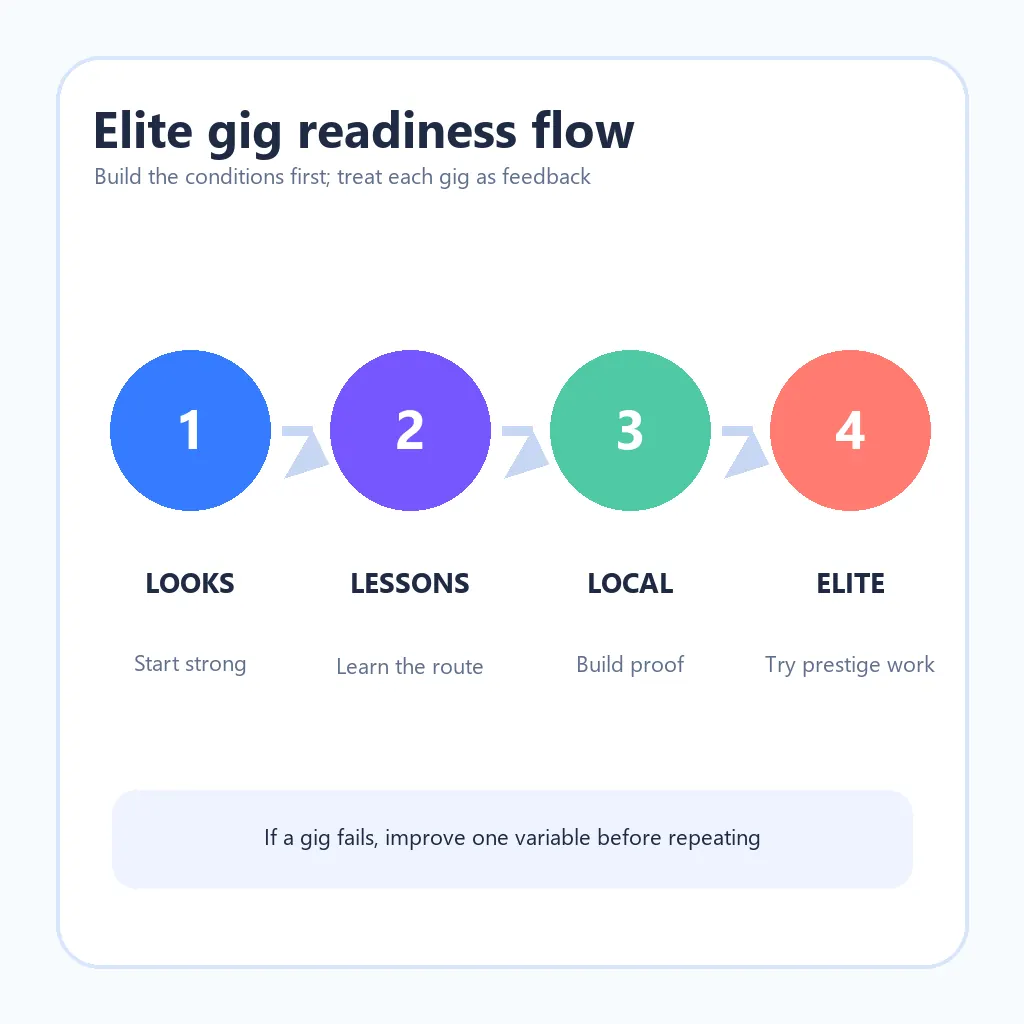
- Keep Looks competitive — Maintain the appearance stat that made the character viable. A model who loses the basic requirement may struggle even when the audition answer is sensible.
- Take modeling lessons when they appear — Lessons are part of the preparation loop. If an early opportunity is unavailable, age carefully and check again rather than abandoning the career path.
- Confirm the feature or job-pack access — Special careers can depend on the account, platform, or available pack. Missing menus are an access question before they are a skill question.
The Local-to-Elite BitLife Progression Route
There is no safe reason to skip every lower-tier opportunity. Local work gives you a chance to test the model system, learn how prompts are written, and see whether the character is actually receiving the career signals you expect.
Use the route below as a troubleshooting sequence rather than a promise of an exact hidden threshold. If the next step does not appear, recheck the previous step and the feature access before adding a new risk.
- Start with a workable model — Build or reroll toward strong Looks and a manageable life. Keep health, money, and relationships stable enough to support several attempts.
- Learn the available modeling route — Take lessons and inspect the job or career menus that your version actually provides. Do not assume an old menu name is still universal.
- Complete local work carefully — Treat smaller gigs as practice. Read the prompt, answer with the dominant mood, and note whether the result improves access, reputation, or skill.
- Review the career signal — After each job, check what changed. More experience, a new option, or better feedback is a reason to continue; a repeated rejection is a reason to adjust one variable.
| Stage | Main focus | What to watch |
|---|---|---|
| Preparation | Looks, lessons, access, and stable life | Do not spend every resource before the career starts. |
| Local gigs | Practice prompts and build recent evidence | Use each result to learn what the current run rewards. |
| Career signal | Review options, feedback, and reputation | Repeated rejection means diagnose one variable. |
| Elite attempt | Try the higher tier with a prepared model | Separate access problems from answer mistakes. |
How to Read Audition and Gig Feedback
Elite Gigs do not remove the need to understand audition prompts. A high-status opportunity can still test Attitude, Poise, Quirkiness, or a balanced combination. The important distinction is that the unlock question and the answer question happen at different points in the run.
When the prompt sounds bold, rebellious, powerful, or intimidating, Attitude is usually the strongest signal. Elegant, polished, formal, or runway language points toward Poise. Funny, strange, awkward, or surreal directions give Quirkiness more weight. Mixed prompts need a controlled blend rather than three maximum sliders.
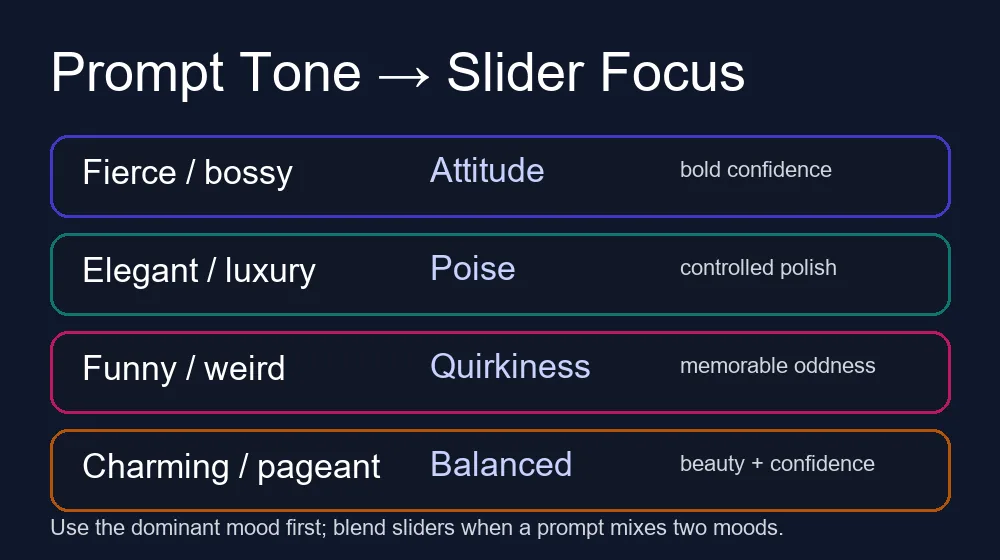
- Separate unlock feedback from answer feedback — A rejection before a prompt can indicate access or career readiness. A rejection after the prompt may indicate a mismatch in the slider response.
- Change one thing at a time — Improve Looks, take a lesson, change the answer, or wait for another opportunity; changing everything together hides the useful clue.
- Use the wording as the strongest clue — A fixed answer list can age badly when prompts are rewritten. Mood-based reasoning stays useful when the text changes.
Why Elite Gigs Stay Locked in BitLife
A locked or missing Elite Gig can have several explanations. Work through the list from the least destructive check to the most specific change.
- The modeling feature is unavailable — Check the current account, platform, and job-pack state. A missing feature cannot be fixed by repeating an audition answer.
- The character has not built enough recent evidence — Complete available local work and lessons first. A run with no recent modeling history gives the game little reason to show a higher tier.
- Looks or health dropped — Repair the basic stats before another high-stakes attempt. Elite work is a poor place to discover that the model is no longer competitive.
- The menu or wording changed — Read the labels in your current version. A community guide can explain the goal while still using an older name for the route.
A safe retry pattern
Record the current career state, improve one weak variable, wait for the next available opportunity, and compare the result. This keeps the run recoverable and gives you evidence instead of guesswork.
Mistakes That Slow Elite-Gig Promotion
Most stalled model careers lose momentum because the player spends the run chasing a label instead of building a repeatable process.
- Skipping every local opportunity — Lower-tier gigs are useful practice and evidence. Refusing them can leave you with no feedback about the route.
- Copying one answer for every prompt — Elite work can still test different moods. Read the direction before touching the sliders.
- Treating an old guide as a guarantee — Feature access and menu wording can change. Use older advice as context and compare it with your current game.
Elite Gigs in BitLife FAQ
References and context
- Official game context: BitLife official website
- Official access context: BitLife Support Job Packs article
- Model-audition context: Pro Game Guides model audition guide
Last updated: September 12, 2026