BitLife Marriage Guide: Proposals, Arranged Marriage, and Divorce
A practical relationship route for meeting a partner, getting a proposal accepted, and protecting the rest of a long BitLife run.

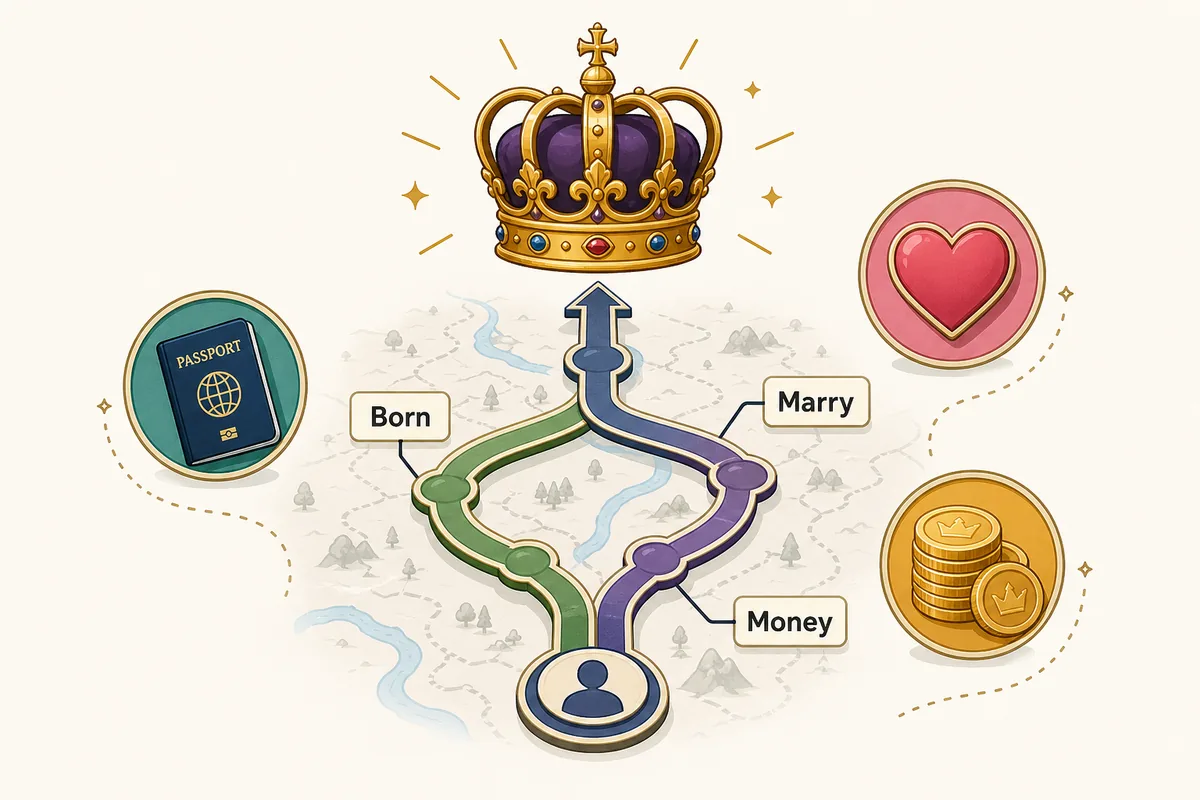
A useful BitLife marriage guide is about sequencing, not a single magic button. Start with a character who can pay bills and recover from a bad event, build the relationship without rushing, then propose when the partner and the wider life are ready.
Players often search for why a BitLife marriage proposal is rejected, how arranged marriage works, or whether divorce will ruin a challenge. The exact menus and outcomes can change, so this guide gives a repeatable decision framework and clearly separates reliable habits from version-specific guesses.
What Marriage Changes in BitLife
Marriage connects a relationship to the rest of a life. It can change household money, family planning, social decisions, and the way a challenge route is scored. The best choice depends on the goal you are protecting.
- A partner becomes a route variable — A spouse can support a stable life, but a breakup, debt problem, or incompatible objective can also create a new risk that was not present while you were single.
- Timing matters more than the ring — A proposal made after steady dates and a healthy relationship usually gives you more room than a proposal made immediately after meeting someone or after a serious argument.
- Money is part of the decision — Keep enough cash for housing, gifts, health care, and the next challenge step. Spending every reserve on a wedding can make the rest of the life fragile.
- Marriage can support or conflict with goals — Family, fame, royalty, money, and ribbon routes each place different demands on a partner. Check the objective before you combine two storylines.
The practical rule
Treat marriage as a checkpoint. Confirm the partner, the next objective, and the recovery budget before you press the action that permanently changes the route.
How to Meet and Prepare a Partner
The safest relationship route gives you several chances to learn what works in the current game version. Use ordinary relationship actions, watch the response, and avoid turning one attractive option into an emergency objective.
- Stabilize the character first — Finish urgent health, housing, education, or income problems before you make marriage the main goal. A stable baseline makes every later choice easier to evaluate.
- Meet through a normal relationship path — Use the dating or relationship option available to the character. Do not assume that one source, country, job, or age works for every update.
- Build compatibility in small steps — Use dates, conversations, gifts, and other available actions deliberately. Check whether the relationship improves before repeating the same action several times.
- Protect the wider run — Keep school, work, health, and challenge requirements moving while you date. A partner should fit the run instead of replacing every other objective.
- Read the current relationship text — When the game shows a compatibility, approval, or family signal, record the wording. Treat it as evidence about your version rather than relying on an old checklist.
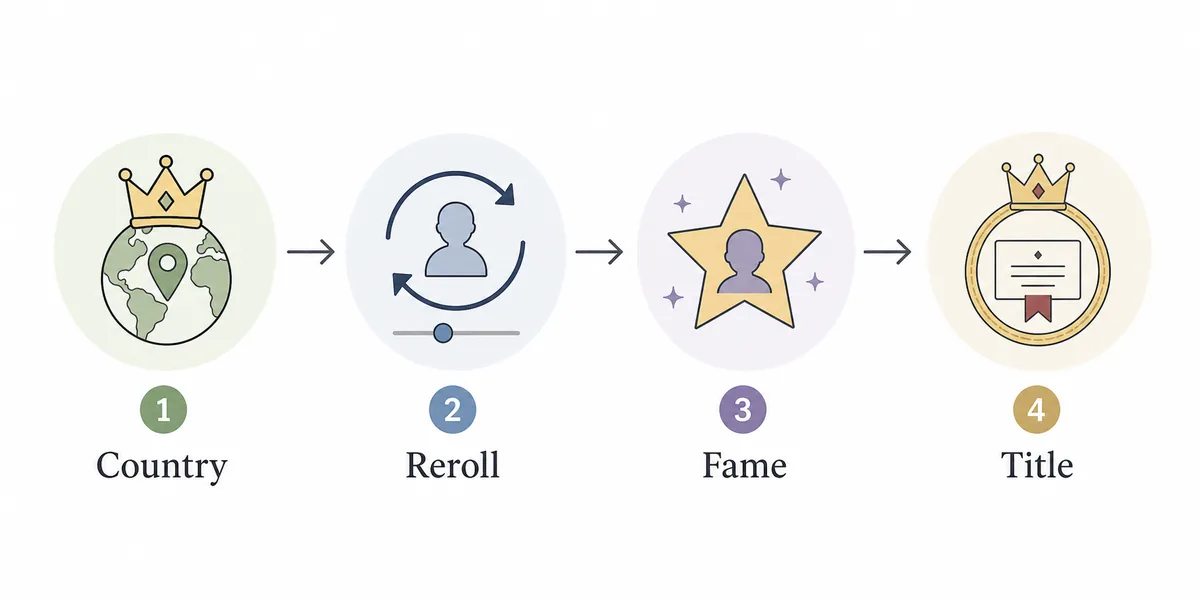
How to Get a Marriage Proposal Accepted in BitLife
If a BitLife marriage proposal is rejected, do not immediately repeat it. A rejection tells you that the current combination of relationship state, timing, money, or partner preference did not work. Improve one variable, age only when the life is safe, and check the relationship again before proposing.
There is no responsible way to promise a universal acceptance threshold when the game can adjust menus and outcomes. Use the table as a controlled experiment: it keeps the most important conditions visible and prevents a failed proposal from consuming the whole run. If the partner keeps rejecting the action, consider a different partner or an arranged route instead of forcing the same outcome.
| Stage | Action | Check before continuing |
|---|---|---|
| Meet | Choose a normal dating or relationship path | The character can keep school, work, health, and money stable. |
| Build | Use dates, conversations, or gifts carefully | The relationship is improving and the action is not draining the reserve. |
| Propose | Make one proposal when the route is ready | The current objective allows marriage and a rejection will not ruin the life. |
| After | Re-read the next milestone | The spouse, household, and budget still support the intended run. |
How Arranged Marriage Fits a BitLife Run
Arranged marriage can be useful when the goal needs a spouse quickly, when a family or country condition matters, or when ordinary dating is producing repeated rejections. It is still a route choice, not a guaranteed shortcut.
- Check the objective before accepting — Make sure the proposed match does not break a challenge condition, a royalty plan, a money route, or a relationship requirement you still need to finish.
- Keep a financial buffer — A fast wedding can arrive before the character is ready for housing, family expenses, or a later purchase. Preserve enough cash to keep the run flexible.
- Use the new relationship as evidence — After the arrangement, watch how the partner responds and how the household changes. A quick match can still become a stable partnership when you manage it deliberately.
- Do not confuse speed with compatibility — Arranged marriage solves the meeting problem, not every later problem. Continue to protect health, money, reputation, and the exact goal that brought you to the route.
When Divorce Is the Safer Choice
Divorce is not automatically a failure. In a long BitLife run it can be the cleanest way to remove a relationship that blocks a challenge, drains the budget, changes a family condition, or keeps producing outcomes that do not match the intended route. Make the decision after checking what the objective actually requires.
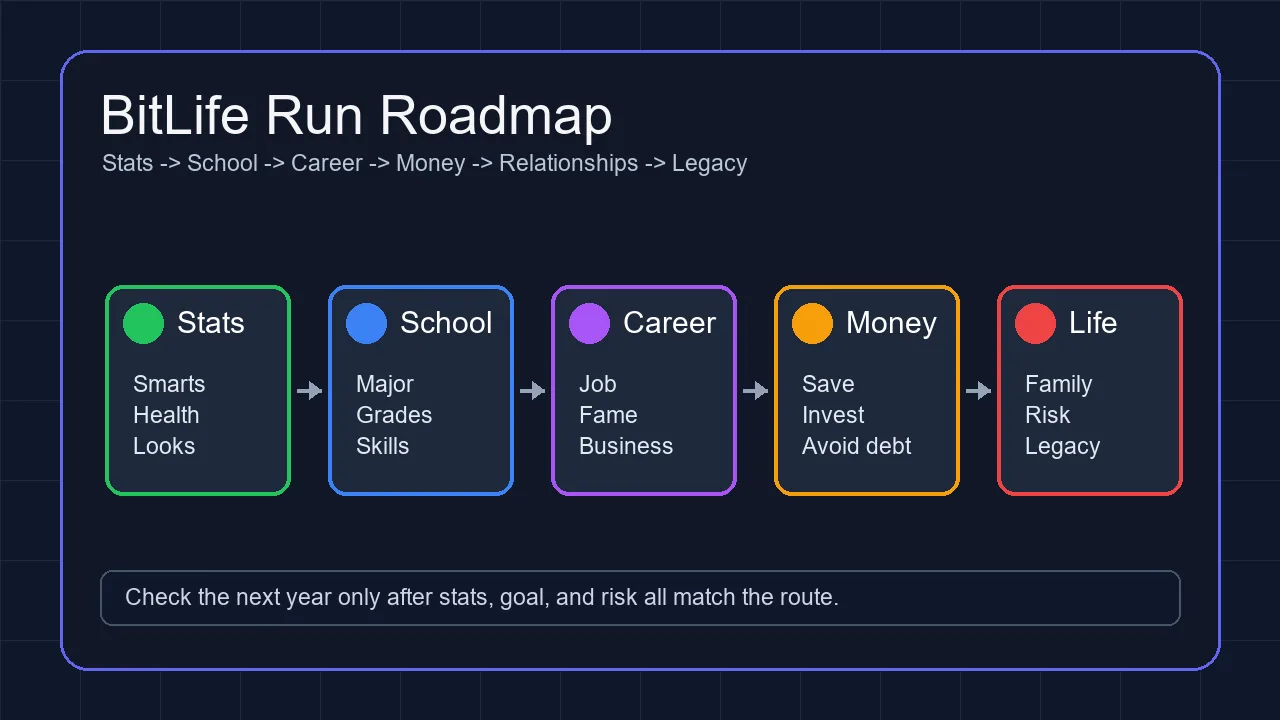
Before divorcing, write down the next milestone and the cost of leaving. Some runs benefit from a clean reset, while others need a spouse, children, status, or shared wealth to remain in place. The roadmap graphic is a reminder to protect the next stage first. If divorce is necessary, finish any same-life requirement that depends on the current household and keep enough money and health to recover afterward.
| Situation | Safer choice | Reason |
|---|---|---|
| The proposal was rejected | Improve one relationship condition and wait | A controlled change teaches you more than repeating the exact same action. |
| An arranged match appears | Compare it with the current objective | Speed is useful only when the match does not break the route you are already building. |
| Marriage creates a budget problem | Protect cash and delay optional spending | A stable reserve keeps health, housing, and challenge recovery available. |
| The spouse blocks the next milestone | Check the cost of divorce before acting | Leaving may solve the conflict, but some routes need the household or status to remain. |
Common BitLife Marriage Mistakes
Most marriage problems come from route drift rather than a complicated control. These habits make rejection, divorce, and challenge failures more likely.
- Proposing immediately — A new relationship has not given you enough evidence about compatibility or timing. Build the connection and keep a backup plan first.
- Spending the entire reserve — A wedding or gift can feel like the finish line, but the character still needs money for housing, health, and the next objective.
- Ignoring challenge wording — A spouse may help one route while invalidating another. Re-read the current objective before you accept a major relationship change.
- Repeating a rejected proposal — Several identical attempts create noise rather than evidence. Change one condition, wait for a useful signal, or choose a different route.
BitLife Marriage FAQ
References and context
- First-party game context: official BitLife website
- Official support: BitLife Support
- Community research context: BitLife guide index
Last updated: September 28, 2026